Client Gifting
How to Gift Clients Who Have a Gift Policy
By Gifting by Cladure Team9 min read

More and more clients work under a gift policy. A gift that breaks it does not just go to waste: it puts your contact in the awkward position of declaring it, returning it or explaining it. The answer is rarely to stop gifting. It is to ask first, choose something modest and shareable, and keep the paperwork simple.
Quick answer: Before you send a gift, ask your contact (or check the client's supplier code) whether there is a value limit, a declaration rule or a no-gift policy. Where gifts are allowed, choose modest, consumable or shareable items, such as a tea or coffee box for the team, a branded notebook or a desk calendar, and send them to the office rather than a home address. Where gifts are not allowed, send a card only. Government, PSU and pharma clients follow stricter rules, so check before sending anything.
This guide is general information, not legal or compliance advice. Gift rules differ by organisation and change over time; your client and your own compliance team have the final word.
Why do some clients cap or refuse gifts?
Gift policies exist to keep buying decisions independent and to avoid any appearance of influence. They usually take one of a few forms:
| Policy type | What it usually means | What to do |
|---|---|---|
| No gifts | Employees may not accept gifts from suppliers at all | Send a card or a written thank-you only |
| Value limit | Gifts are allowed up to a set value; anything above must be declined or declared | Ask for the limit and stay well under it, including packaging |
| Declare and register | Gifts are allowed but must be recorded in a gift register | Choose something easy to describe and value; keep the invoice value handy |
| Shared gifts only | Gifts for a team or office are allowed; personal gifts are not | Send one shareable box to the office, addressed to the team |
| Quiet periods | No gifts while a tender, audit or contract renewal is under way | Wait until the process closes, then send |
| Sector rules | Government, PSU, banking and pharma clients may follow external rules or codes | Check before sending anything; see the section below |
We do not quote specific value limits here, because they vary from one organisation to the next and are revised over time. Your contact or the client’s supplier code is the only reliable source.
How do you ask a client about their gift policy?
Asking is normal and most contacts appreciate it, because it saves them an awkward conversation later. Keep it short and practical, and ask well before the festive rush:
"We send a small thank-you to our clients around Diwali each year. Before we do, is there anything in your gift policy we should keep in mind, such as a value limit, or a preference for something the whole team can share? Happy to send just a card if that is simpler."
Record the answer against the client in your CRM or gifting sheet so that next year you do not need to ask again. If the contact changes, ask again.
How we chose policy-friendly gift types
We did not rank by price. Each gift type below had to pass these tests:
- Modest, clear value. Easy to state in a gift register and comfortably inside a low budget band.
- Shareable or consumable. A box the team opens together, or something used up, raises fewer questions than a personal keepsake.
- Useful at work. Desk and stationery items read as a business courtesy rather than a personal favour.
- Quiet branding. A logo on the card or the packaging, not a loud print, keeps the gift professional.
- Sent to the office. Office delivery keeps the gift visible and in line with most policies.
Gift types that are easy for clients to accept
A coffee box for the team
A coffee hamper sent to the office, addressed to the whole team, works well under "shared gifts only" policies because nobody takes it home personally. It suits client teams of any size in the ₹500 to ₹1,000 band. Your logo goes on the box sleeve and the card. Check shelf life against the delivery date when you order.
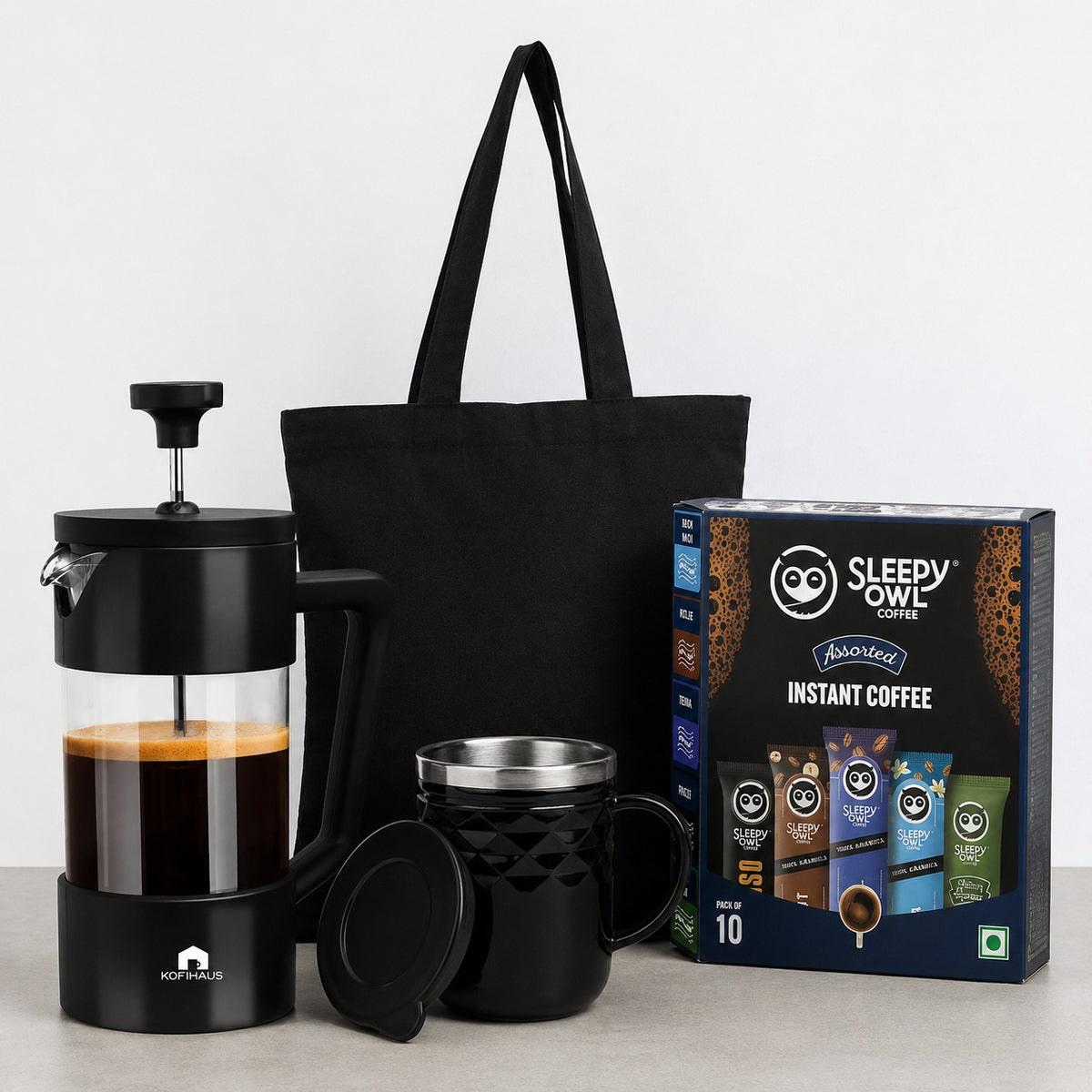 Example from our rangeCoffee Essential HamperFrom ₹770 per unit, indicative
A tea collection
An assortment of teas is consumable, easy to value and familiar in almost every Indian office. It sits comfortably under ₹1,000, so it suits clients with a low value limit as well as large client lists. Branding goes on a printed sleeve or card rather than the tea packaging itself.
 Example from our rangeSancha Tea Indian Tea CollectionFrom ₹731 per unit, indicative
A bamboo desk set
Desk organisers and stationery read as a working courtesy, which is how many policies distinguish acceptable items from personal gifts. A bamboo desk set suits individual contacts and procurement teams in the ₹500 to ₹1,000 band. The logo can usually be printed or engraved on the bamboo; the quote confirms the method.
 Example from our rangeBamboo Desk Essentials HamperFrom ₹889 per unit, indicative
A branded notebook
A good notebook is the classic low-value business gift: used every day, easy to declare and well within most limits. It suits clients who prefer something modest, especially at the start of a calendar or financial year. A debossed or printed logo on the cover is the usual branding.
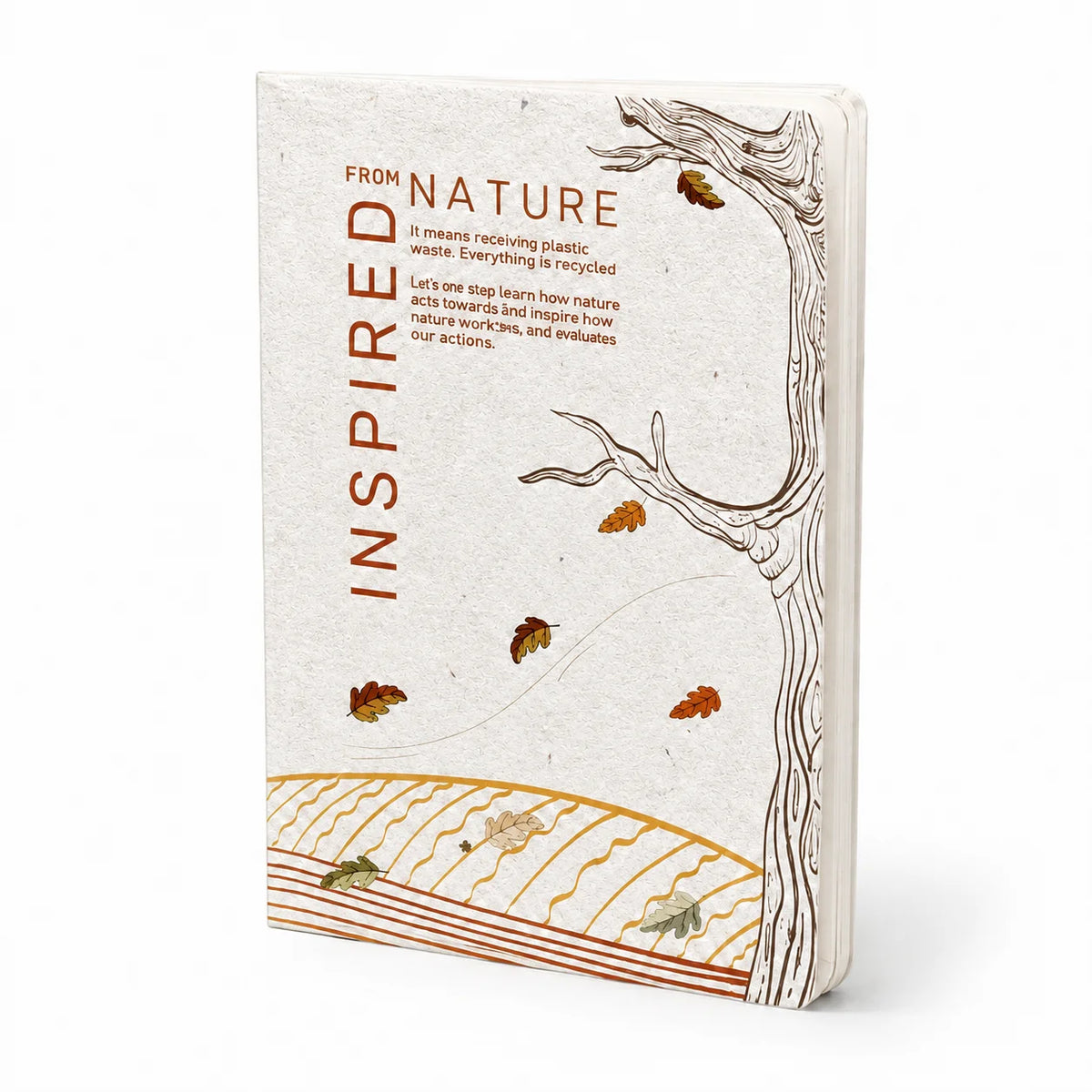 Example from our rangeBioQ Plantable Diary B6From ₹132 per unit, indicative
A desk calendar
A perpetual desk calendar sits on the desk all year, which makes it a useful reminder of the relationship without being a personal luxury. It suits individual client contacts in the ₹500 to ₹1,000 band. Branding is usually a small engraved or printed logo on the base, subject to the material.
 Example from our rangeWooden Perpetual Desk Calendar with ClockFrom ₹626 per unit, indicative
A box of chocolates for the office
Chocolates sent to an office reception, with a card for the team, are about as easy to accept as a gift gets. They suit a long client list at a low per-head cost, often under ₹500. Add a branded outer sleeve, and plan delivery so the chocolates arrive fresh.
 Example from our rangeSmoor Chocolate Luxe Treat Box Of 5From ₹196 per unit, indicative
A festive tea hamper for a team
Where a policy allows one shared gift per team, a slightly larger festive tea hamper gives a fuller feel without making any one person the recipient. It suits client teams of five to fifteen people in the ₹1,000 to ₹2,000 band. The branding sits on the box and the card.
 Example from our rangeFestive Tea Indulgence HamperFrom ₹1,014 per unit, indicative
A card only
For clients with a no-gift policy, a well-written printed or handwritten card is the right gift. It costs little, breaks no rules and is often remembered because so few suppliers take the time. Keep it to two or three specific lines about the year you worked together; branded card printing is one of our customisation options.
Regulated sectors: government, PSU, banking and pharma
Government departments and PSUs
Government employees are covered by conduct rules that restrict the gifts they may accept and require them to report gifts above set values, and public sector undertakings usually have conduct rules of their own. The limits and reporting thresholds are set in those rules and are revised from time to time, so do not assume a figure. For most government and PSU contacts, the safest course is a card, or a modest shared item for the office if your contact confirms it is acceptable. Avoid gifting at all during a tender or evaluation.
Banks, insurers and financial firms
Many banks and financial firms run gift registers and value limits for staff, especially for people involved in lending, procurement or vendor selection. Ask your contact, keep to shareable office gifts, and keep the invoice value to hand in case it must be declared.
Pharma companies and healthcare professionals
If your company is a pharmaceutical company, or acts on behalf of one as an agent or distributor, gifts to doctors and other healthcare professionals are a separate matter. The Uniform Code for Pharmaceutical Marketing Practices (UCPMP) 2024, issued by the Department of Pharmaceuticals in March 2024, restricts gifts and personal benefits to healthcare professionals and their family members, and sets conditions for the limited informational and educational items it allows. Read the current text on the Department of Pharmaceuticals website and take advice from your compliance team before planning any gift for healthcare professionals. We do not advise on how the code applies to a particular case.
Gifting between businesses, for example to a hospital's purchasing team or a pharma client's marketing department, follows that organisation's own policy, as with any other client.
Keep the paperwork simple
- Keep one gift per tier. If every client in a tier gets the same gift at the same value, it is easy to explain and to declare.
- Keep the invoice. If a client must record the value in a gift register, you can tell them the value quickly. Our written quote shows the price, GST and delivery.
- Send to the office. Address shared gifts to the team at the office rather than to an individual's home.
- Avoid cash equivalents. Vouchers, gift cards and coins of precious metal are treated more strictly than ordinary gifts under many policies.
- Time it outside sensitive periods. Hold gifts while a tender, renewal or audit is open.
- Keep the logo modest. A small logo on the packaging or card reads as a courtesy; a large print reads as promotion.
For the wider client gifting process, see corporate gifts for clients, what makes a good client gift and how to plan year-end client gifts. Gifts in the under ₹500 and ₹500 to ₹1,000 bands suit most clients with a value limit.
Ordering policy-friendly client gifts
Send your client list in tiers, with a note against any client who needs a card only or a shared office gift. Share the quantity per tier, the budget per gift, the branding (logo on the card, sleeve or product), the delivery cities and the date you need gifts to arrive. We are based in Delhi NCR and deliver across India; the written quote confirms the final price, GST, minimum quantities and delivery. How ordering works explains each step.
Frequently Asked Questions
How do I find out a client’s gift policy?
Ask your main contact directly, ideally a few weeks before you plan to send anything. Some clients also publish a supplier code of conduct that covers gifts. Record the answer so you do not need to ask every year.
What is a safe gift for a client with a value limit?
A modest, consumable or shareable item, such as a tea or coffee box for the team, a branded notebook or a desk calendar, kept comfortably under the limit including packaging. Ask for the limit rather than guessing.
What should we send a client with a no-gift policy?
A card. A short, specific thank-you message, printed or handwritten, respects the policy and is still noticed.
Can we send gifts to government or PSU officials?
Government employees and PSU staff are covered by conduct rules that restrict gifts and require reporting above set values. Check with your contact and your own compliance team; in most cases a card or a modest shared office item is the safe choice.
Does UCPMP 2024 apply to all corporate gifting?
The UCPMP 2024 is a code for pharmaceutical marketing practices. It concerns gifts and benefits from pharmaceutical companies, and those acting for them, to healthcare professionals. Read the code itself on the Department of Pharmaceuticals website and take compliance advice for your situation.
Can we get an invoice showing the gift value for a client’s gift register?
Yes. Your written quote and invoice show the price per unit, GST and delivery, so you can tell a client the value if they need to declare it.
Should gifts for clients with a policy carry our logo?
A small logo on the packaging or card is usually fine and keeps the gift professional. Avoid making the product itself look like promotional merchandise.